The José Mariano Gago Prospective Analysis Award has an open call >>>
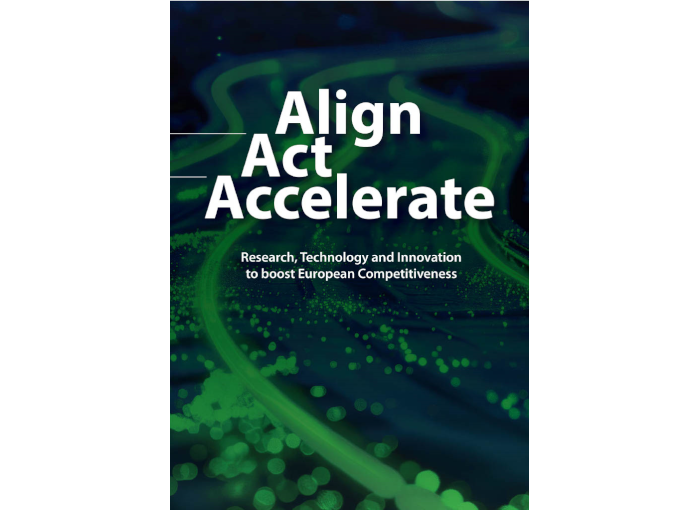
This independent expert report provides strategic recommendations on maximising the impact of EU Research and Innovation programmes in the future. It is based on the preliminary findings and data on Horizon Europe and findings and conclusions stemming from the ex-post evaluation of the Horizon 2020 programme, and on other sources. It advocates that Europe should pursue a transformative agenda to address four critical and interdependent core spheres of action. This transformative agenda should be implemented in the short term, through specific actions in the last three years of Horizon Europe, 2025-2027, and embedded in future EU support to research and innovation.
Publications Office of the European Union
2024
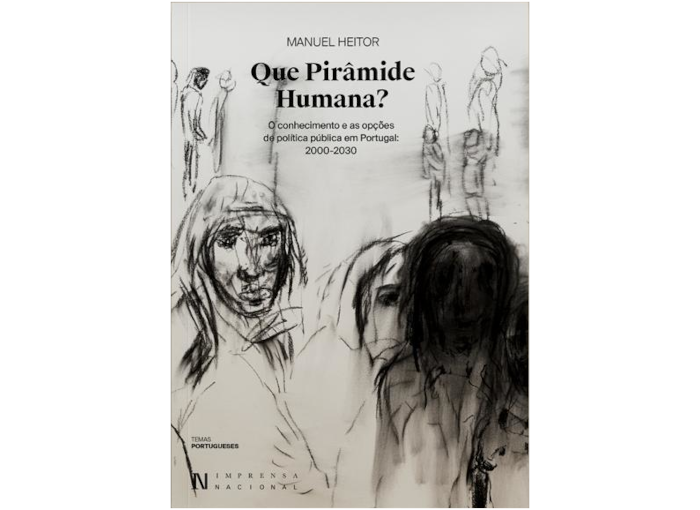
This book addresses the way in which thinking about knowledge in Portugal has been appropriated socially and politically. The analysis is developed on the basis of many of the reflections that have been tested, developed and implemented over the last few decades, especially since European integration in 1986, focusing on the period 2000-2021 and including a prospective analysis for 2030.
It includes the premise that Portugal is currently in a position to foster a mostly happy society and position itself as a center for advanced training and knowledge production with the capacity to establish partnerships on a global scale. However, it must continue to evolve in order to strengthen collaborative agendas with more science, more society and more economy, guaranteeing a sustainable future for the next generations.
More than 60 years after French ethnographic filmmaker Jean Rouch's “Human Pyramid”, Manuel Heitor's analysis increasingly invites us to experiment with new participatory movements of collaborative innovation on a transdisciplinary scale. It also requires learning to face the challenges of the systematic expansion of the social base of support for knowledge, as well as the necessary reinforcement that the growing specialization at the top of scientific knowledge demands.
But it also requires complementing these processes by densifying and diversifying the institutional environment that stimulates the social construction of knowledge. And it also requires guaranteeing the open and free participation of everyone in the development process itself and not just watching any imposed form of development.
In other words, it requires perceiving, stimulating and guaranteeing the continuous and systematic transformation of the human pyramid.
This book begins with a series of drawings by the painter Graça Morais, from the 2018 Metamorphosis of Humanity series, which question and lead us to better understand the human condition and, in particular, the terms of the evolution of the human pyramid in Portugal, including openness and tolerance for growing migratory movements. The book is also introduced by a set of testimonies by experts who have been particularly involved in many of the reflections that have been tested, developed and implemented over the last few decades.
The book is structured into seven chapters, so that they can be read independently and non-sequentially, making it easier to read parts of the book on specific topics without having to read all the previous chapters. All the chapters naturally include a personal interpretation of Portugal's journey since integration into Europe, focusing on the period 2000-2021 and looking ahead to a possible evolution in 2030.
Imprensa Nacional
Lisboa, 2024
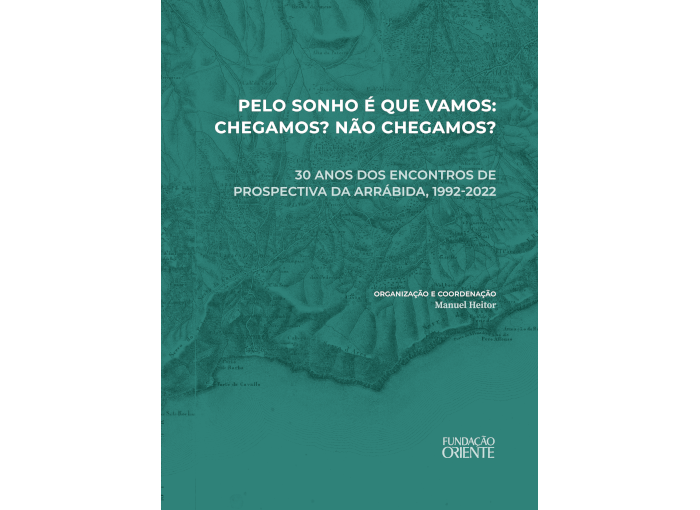
This book includes essays and reflections that have resulted from the annual Prospective Meetings of Arrábida, held since 1992 and which aim to analyze their impact on Portugal's development (in Portuguese).
Orient Foundation
Lisbon, 2024
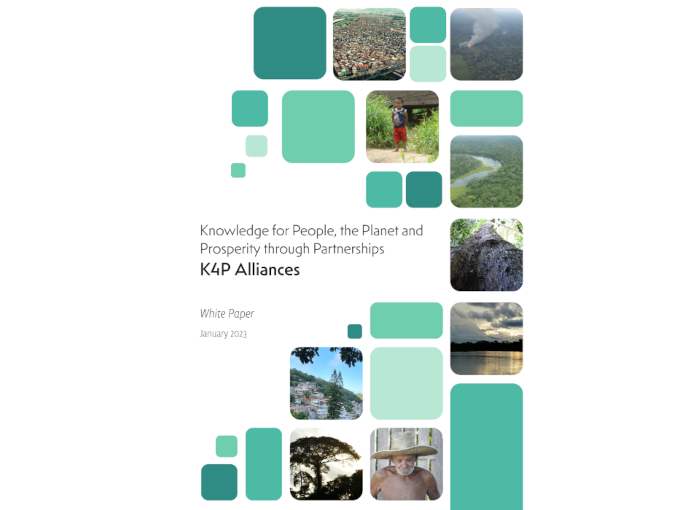
A White Paper aiming to promote an international joint venture to strengthen thetransatlantic dialogue and the cooperation with the Global South, with emphasis inAfrica and Latin America.
December 2022
Edited transcription of José Mariano Gago's closure concluding the conference on "Flanders Future as a Knowledge society from an international perspective"
Brussels, Palace of the Academies, November 28, 2014
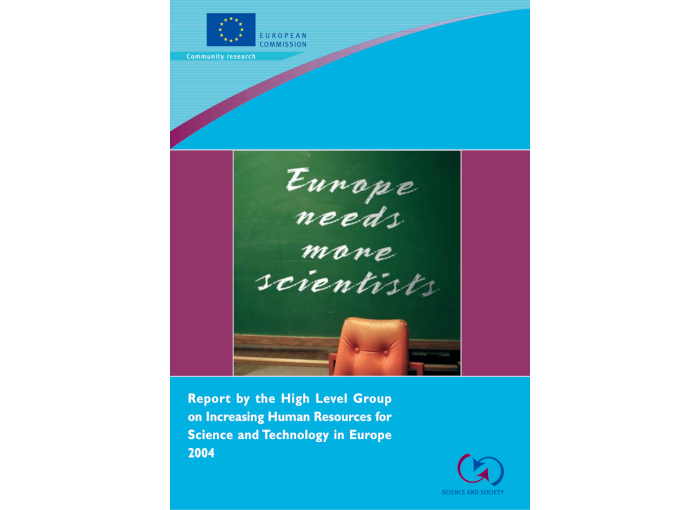
This report was produced by a group of experts to identify specific actions or policy measures which, within the context of the European Research Area, could help towards the 3% goal. At the Barcelona summit, heads of state called for an increase in the proportion of European GDP invested in research from 1.9% to 3%. In terms of human resources, it was estimated that an extra half a million researchers would be needed to meet that goal.
The group conducted a review of the main factors affecting the development of human resources from the research institutions and industries employing R&D personnel, to the educational process from the secondary schools to universities, and to public opinion. An extensive consultation process forms the basis for the group's recommendations.
European Commission
Report by the High Level Group on Increasing Human Resources for Science and Technology in Europe, 2004
Luxembourg: Office for Official Publications of the European Communities
2004 — 187 p. — 21.0 x 29.7 cm
ISBN 92-894-8458-6
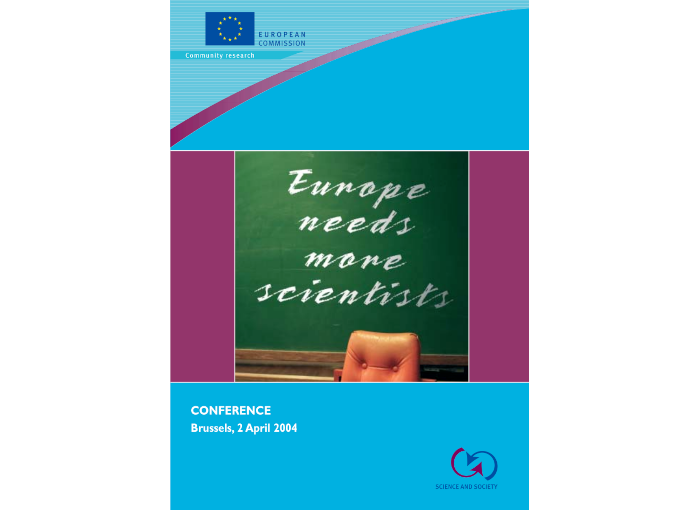
European Commissioner for Research Philippe Busquin appointed the High Level Group on Human Resources for Science and Technology in Europe – in May 2003 – chaired by José Mariano Gago, former Minister of Science and Technology, Portugal.
This brochure presents a summary of the Group’s findings, first published in April 2004, on how to reinvigorate scientific careers and prospects in Europe – and of the proceedings of the conference coinciding with the launch of the report under the same title.
European Commission
EUR 21224 – Increasing human resources for science and technology in Europe
Luxembourg: Office for Official Publications of the European Communities
2004 – 20 pp. – 21.0 x 29.7 cm
ISBN 92-894-8459-4
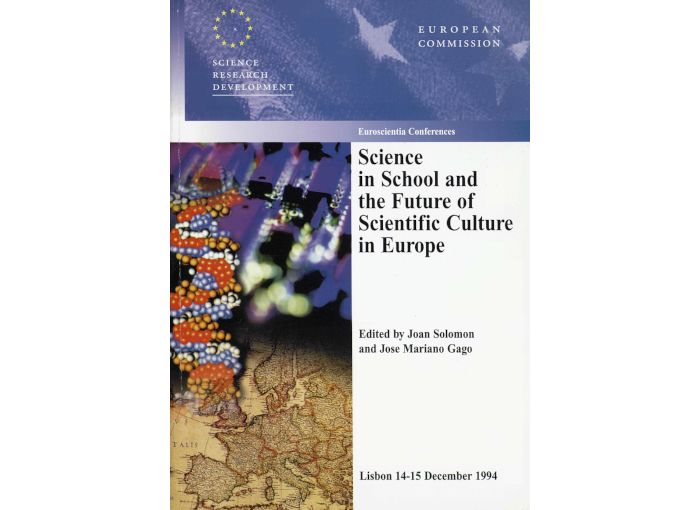
Edited by Joan Solomon and Jose Mariano Gago
European Commission
Science in School and the Future of Scientific Culture in Europe
Luxembourg: Office for Official Publications of the European Communities
1998 — 700 pp. — 17 χ 24 cm
ISBN 92-828-4382-3
Study financed by the European Social Fund within the scope of technical assistance to PRODEP, carried out by the Instituto de Prospectiva for the Ministry of Education
Gago, José Mariano, Prospectiva do Ensino Superior em Portugal. Portugal. Ministério da Educação. Dept de Programaçao e Gestao Financeira, DEP-GEF; Instituto de Prospectiva (Portugal). Lisboa: Ministério da Educação, DEP-GEF, 1994

Edited by Alexis Jacquemin and David Wright Edward Elgar—Aldershot & Vermont, 1993, ISBN 1 85278 829 1, 1 85278 830 5 (paperback). (480 pages).
What major long-term factors will shape the European Community post-1992? Who are the central actors, how will they exert influence on Europe's future, and what are their expectations and intentions?
The European Challenge Post-1992 includes contributions by the former Commissaire du Plan (Brussels), the Institute of International Economics and Management (Copenhagen), Commissariat General du Plan (Paris), Kiel Institute of World Economics (Kiel), Foundation of Economic and Industrial Research (Athens), Economic and Social Research Institute (Dublin), Centro Studi Investimenti Sociali (Rome), Institut Universitaire International (Luxembourg), Scientific Council for Government Policy (The Hague), Instituto de Prospectiva (Lisbon), Fundacion Empresa Publica (Madrid), McKinsey & Co. and the Policy Studies Institute (London).
The product of a major research project, this distinguished book is an invaluable reference point for all those concerned with the future of the European Community
Publisher: Edward Elgar Publishing; First Edition (March 1, 1993)
Language: English
Paperback: 488 pages
ISBN-10: 1852788305
ISBN-13: 978-1852788308
Versão Portuguesa disponível para compra neste link
Gago, José Mariano, "Elogio da Superioridade: uma ideia feroz de Universidade", in AA. VV., Colóquio - Educação e Sociedade, 3, Lisboa, Fundação Calouste Gulbenkien, 1993, pp. 67-77.
Cordenação de José Mariano Gago
Biblioteca Nacional - Catalogação na Publicação
O estado das ciências em Portugal
Org. José Mariano Gago
(Nova enciclopedia; 37)
I. Gago, José Mariano
ISBN 972-20-l014-X
CDU 001.89(469)"19"
Coordination: José Mariano Gago
Gago, José Mariano (Coord.), Ciência em Portugal, Lisboa : Imprensa Nacional-Casa da Moeda, 1991
This manifesto is an essay.
It proposes an analysis of scientific development strategies based on the renewal of education, on the creation of scientific culture, on the rupture of Portuguese scientific isolation — isolation from abroad, but also the social and cultural, economic and political isolation of science in its own country.
The José Mariano Gago Prospective Analysis Award has an open call >>>
Since 2022 we are based at IN+/IST, in Lisbon: